Art is a powerhouse of sensory stimulation matched only by nature–which it so often depicts–in its reputation as soul food. Recently, I had a long overdue art fix with friends that started at the MET on Saturday and ended on Sunday with the Van Gogh Immersive Experience, a multi-sensory art event.
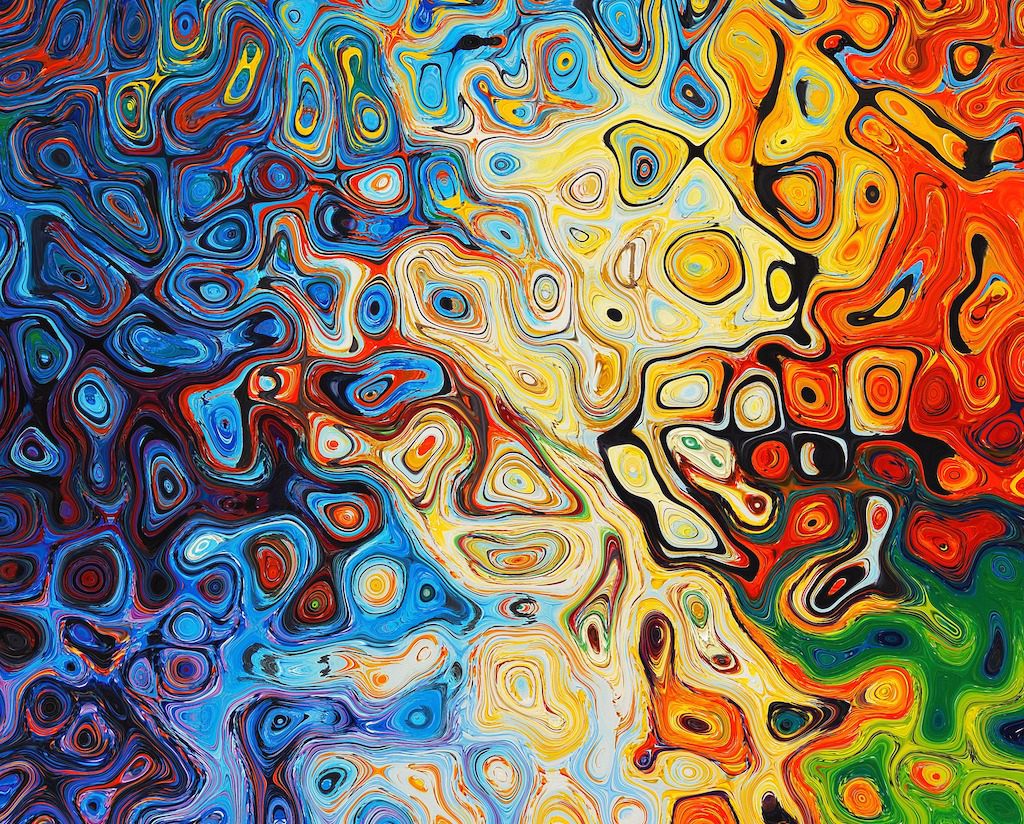
Van Gogh purportedly had a neurological condition called synesthesia, specifically in his case, chromesthesia. British neurologist, Dr. Oliver Sacks, described synesthesia as “an immediate, physiological coupling of two sorts of sensation.” Synesthetes might equate taste with different shapes or colors with certain numbers. Red is five, two is blue, three yellow, and so on. In letters to his brother Theo, Vincent described seeing colors when he heard music.
The immersive experience channeled Van Gogh’s art through the lens of his chromesthesia in a spectacular audio-visual movie that felt not only multi-sensory, but multi-dimensional. At times, the floor seemed like it shifted underfoot or slid lower on one side. Music and light effects served as conduits from one period of his art to another and enhanced the art being projected on, not just the walls, but ceilings and floors.
Sacks devoted his life to treating, researching, and writing about neurological conditions, including synesthesia. These types of conditions are rarely celebrated in the moment, but Sacks found a way to explore and explain them to a broad audience, opening a portal to people who perceive differently, who live alternate realities. Van Gogh, who suffered from depression and mental instability unrelated to his synesthesia, took his own life at age 37 and was only recognized as an artistic genius posthumously.
We alternately crave peace and stimuli to rejuvenate us. Both coexist together in one electrically charged human body living in a magnificently connected whole. Does Van Gogh’s arc suggest a kind of transformation that we cannot foresee or control, one that begs us to perceive differently in real time and not wait for history to show the way? We can be awed right now, not dismiss the uncomfortable, but instead experience with a multi-sensory heart that asks, “What am I being shown? What can I learn? How am I connected?”
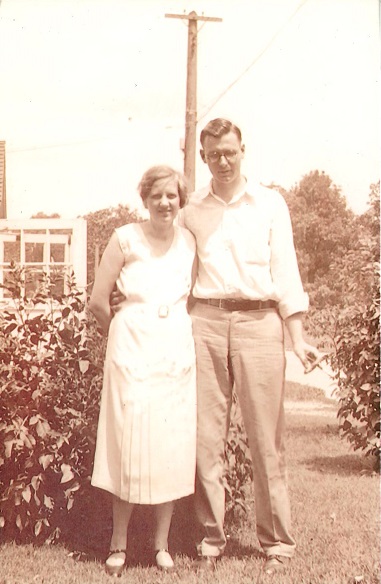



 If I were a medium, a seer with a proper crystal ball, not a Magic 8-Ball bought at Target for a Halloween costume, would I be able to dialog with you, hear your voice, your laugh, know the endings to the Swedish mysteries we watched, hold your hand and kiss your cheek? Would I be able to locate a thin place or a dream where I could pierce the veil and visit you? Cannot predict now.
 I am a little preoccupied with souls. The protagonist of the novel I’m writing is a soul named Alex. Alex, dead from an accidental heroin overdose, has a lot of karma to reconcile as well as a jones to be born again that rivals his heroin addiction. Suddenly life is so very precious.
 “They were together in silence like an old married couple wary of life, beyond the pitfalls of passion, beyond the brutal mockery of hope and the phantoms of disillusion; beyond love. For they had lived together long enough to know that love was always love, anytime and anyplace, but it was more solid the closer it came to death.” Love in the Time of Cholera, Gabriel García Márquez
 It had been several years since I made my way to the middle of the country in a car, more often looking down on the neatly quilted squares of farmland from 35,000 feet. From the road those squares blurred into a smooth white blanket whose edge began at the nearest rim of vision and extended to an endless horizon. Like most blankets, it was comforting while holding the potential to smother.
 Divine Ready