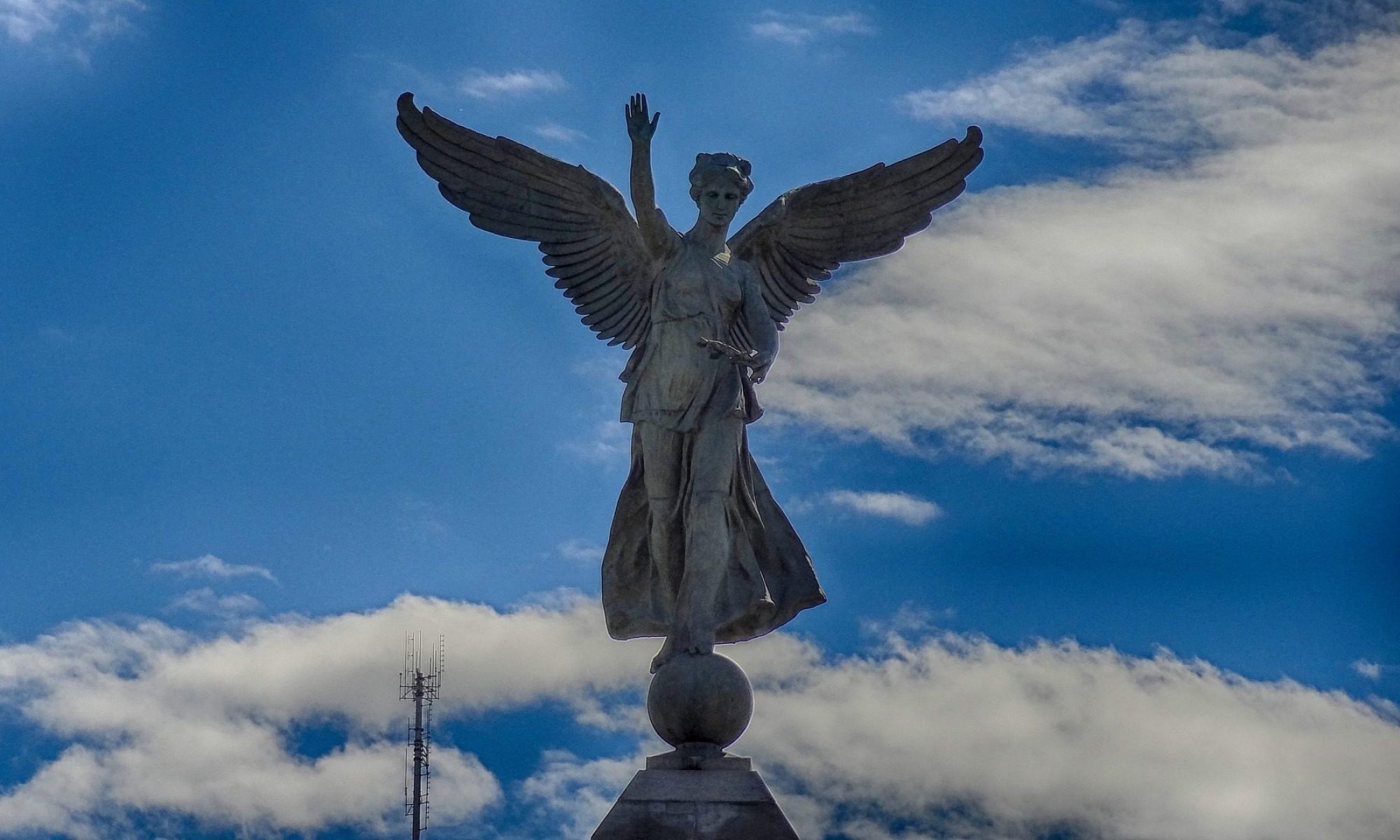
 Growing up in the Midwest, I learned at a young age that eerie outdoor silence is nature’s harbinger of severe weather–calm before the storm. The wind might kick up a little, but the birds and animals are keeping quiet vigil in their safe houses. Recent events have me asking myself, why didn’t I hear the silence before the storms?
Silence, it could be said, has a multiple personality disorder. Silence can be a warning, yes, but it can also be an emotional weapon—the silent treatment—a passive aggressive punishment. And silence can be a sign of depression, ennui or a certain kind of impotence—an inability or unwillingness to take action. Silence exerts power, significance and solemnity when she walks or sits in silent protest.
I’m a big fan of the good silences. I know that when I practice meditation it makes me calmer and clearer. There is peace in silence when you can find a sliver. I also believe an intentional moment of silence alone or with a group holding vigil is holy, and a way of radiating peaceful, positive energy to salve the crackling rage and violence that is smoldering just below the surface all around us ready to conflagrate anywhere at any time like it did in Las Vegas.
It has become a tradition for US lawmakers to hold just that kind of moment of silence after a major tragedy. Some of the Democratic lawmakers refused to partake in the ritual after the mass murder in Nevada stating it was not enough anymore. Several social justice groups and individuals also made that declaration. What we need is action, not silence, on gun control and not just on bump stocks and other similar devices, though that’s being touted as the first step toward “real” gun control legislation. How long will that take? And how many more silenced lives?
Gun control is a particularly divisive issue in the US; the UK took further legislative action in 1997 after the Dunblane massacre of the previous year. Here we have massacre after massacre and still cannot kick our addiction to guns and violence.
We need the silence of contemplation and the rational, just action that arises from it en masse. Because more storms are coming, and we have run out of safe houses.
Some sites to check out if you wish to become more involved:
The Coalition to Stop Gun Violence
The Law Center to Prevent Gun Violence
 Many of John Kingham’s words give me pause. We live in vastly different worlds, he and I; John is an inmate locked up in Florida, while I am living freely in New Jersey, too often taking for granted the privileges that come with my freedom.
 When inspiration and creativity seem like close friends who have moved far away, my world can get a little gray. I’ve learned, however, I will eventually find my way out of the Chinese box through art in one of its many forms. After five episodes of David Gelb’s captivating series, “Chef’s Table,” I can feel my close friends returning. Gelb profiles some of the most renowned chefs in the world who share wonderful life lessons garnered on their journeys to becoming who they are–not necessarily new lessons–but refreshing reminders with a twist from world-class chefs. You do not have to be a foodie to appreciate what’s being served here.
 that growth does not take place on a secure path, hence there is a willingness to take risks and to reinvent and change course in order to succeed. Dedication, perseverance and being true to oneself are common themes among these master chefs who create dishes that not only look like works of art but carry appellations like the Industrious Beet, and King George Whiting in Paperbark, and Oops! I Dropped the Lemon Tart.
 Stating the obvious, creativity is more than a required riff among these chefs. It is the essence of everything they are doing. They draw inspiration from other art. There is talk of cooking being soulful, as well as rooted in childhood experiences and memories, evoking scent, flavor and comfort from those years. The chefs strive to create unforgettable, unparalleled experiences for their guests, conjuring magic in explosions of joy and flavor.
 I write this the day after another terrorist attack in London that left seven dead and over 40 injured. The country has not had time to heal from the Manchester bombing a few short weeks ago. On the way home this morning I listened to a discussion on the radio about the racially motivated stabbing attacks on a train in Portland, Oregon. The two men who tried to intervene were murdered. It’s three days since President Trump decided to withdraw from the Paris Climate Change agreement.
 For many years now I have walked through the woods on the cliff along a dirt path to a clearing near the George Washington Bridge where the view turns decidedly urban. To the south is the Manhattan skyline—inviting, intimidating, energizing and enervating all at once. The bridge itself is also impressive. About 500 feet shy of a mile, the double-decker, 14 lane suspension bridge carries over 100 million vehicles a year. From my perch at the west side of the GWB, I can see many of those cars and trucks crossing.
 Though relatively mild, this past winter seemed particularly long. There was much tussling with unwelcome thoughts and feelings, and I found myself a bit desperate for distractions from my jagged, dark edges. Up cropped a familiar longing to flee and the just as familiar resignation that there is nowhere to run from yourself. But a gal can try, can’t she? Let the great escape begin!
 The Cloisters Museum and Gardens is a branch of the Metropolitan Museum of Art devoted to medieval art and architecture. In addition to the gardens, one of their most popular permanent exhibits is The Hunt of the Unicorn tapestries, consisting of seven large tapestries woven in the late 15th/early 16th century. They depict a hunt which ends with the precious unicorn in captivity. The unicorn is a legendary creature said to have been endowed with magical powers such as the ability to purify water and heal sickness.
 On Sunday I found a bird in the backyard trying to fly but caught in something that kept pulling her back to the ground. Initially it looked like fishing line, but when I got closer I could see it was some sort of vine, dry but very strong. I got some scissors to cut her free, but she was so frightened she kept trying to lift-off, and I was unable to cut as close to her foot as I would have liked. Still, I got the vine cut and on her first attempt she hopped-flew just a short distance, so I tried to get closer again, but then she took flight, trailing six inches of vine still wrapped on her leg.
 The older I get, the less in touch I am with latest lexicon of street slang. I only first heard the phrase “stay woke” when I attended the Martin Luther King Day event at Riverside Church.
 “We have come into this exquisite world to experience ever and ever more deeply our divine courage, freedom and light!” Hafiz
 Divine Ready